
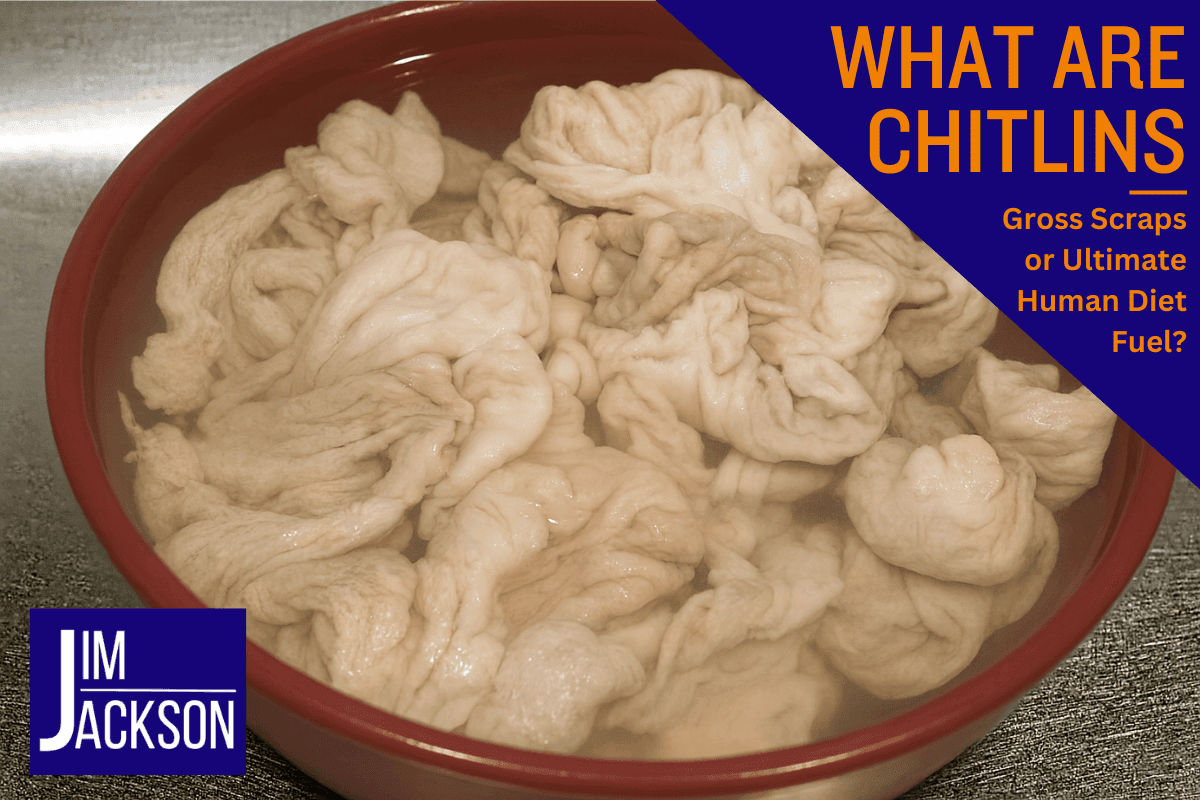
What Are Chitlins: Gross Scraps or Ultimate Human Diet Fuel?

I was chatting with someone the other day and telling them I write about offal and organ meats, and how we used to eat all parts of the animal, letting nothing go to waste.
To say she thought I was crazy is an understatement. The thought of eating such things as liver, kidneys, and heart, to her, was insane.
I mention this because my response was, “What do you think they make sausages from? They mash up all the entrails, stuff them into an intestine, and call it a sausage”. As I said this, she put her fingers in her ears and exclaimed, “I don’t want to know; I love sausages!”
Now, sausages aren’t strictly chitlins (or chitterlings, if you’re being formal), but they’re close – I realize I may have offended some by saying that… apologies if I have.
They’re actually pig intestines that have fed families for centuries. For some, they’re a southern delicacy dripping with tradition. For others? They’re the dish you politely avoid when your uncle lifts the lid off a steaming pot at Christmas.
They carry history, culture, and a nose-to-tail philosophy that most of us have forgotten. Why did enslaved people turn them into soul food? Why do African Americans keep the tradition alive? And why do some cultures around the world still prize animal intestines as part of their diet?
Intrigued? Well, we’ll tackle what chitlins taste like, how to cook them safely, and why they might deserve a place in the ultimate human diet.
TL;DR
- Chitlins (chitterlings) are pig intestines, once a survival food for enslaved people. They are now a southern delicacy and a cornerstone of soul food.
- Preparing chitlins safely means thoroughly cleaning, pre-boiling, and slowly cooking in a covered or large pot with the right seasonings.
- Love ’em or hate ’em, chitlins taste varies — but with hot sauce, garlic powder, or apple cider vinegar, they’re a celebrated dish commonly served with collard greens or potato salad.
- Beyond the South, making chitterlings or using animal intestines is part of global food culture, and they fit perfectly into the nose-to-tail philosophy and ultimate human diet.
What Are Chitlins?
At their simplest, chitlins are the small intestines of a pig, cleaned, cooked, and served in a variety of ways. They’ve been part of the southern table for generations, often appearing during holidays and family gatherings.
While they’re most famous in the United States, animal intestines have been eaten in some form in nearly every culture.
They’re also commonly called chitterlings — the older English word dating back centuries. “Chitlins” is just the Southern shorthand that stuck because it rolled off the tongue a little easier.
Either way, both terms point to the same thing: pig intestines prepared for eating. Don’t confuse them with tripe, which comes from a cow’s stomach — that’s a different cut and a different dish altogether.
Depending on who you ask, chitlins are either nostalgic comfort food or the one plate you’ll never touch at the party.
Love them or hate them, they remain a symbol of using the whole animal and passing down food traditions that survive generations.
A Brief History of Chitlins
Chitlins carry a history far deeper than just being a southern delicacy. Their roots stretch back to the days of enslaved people in the United States. When pigs were butchered on plantations, the prime cuts went to the slaveholders, leaving the scraps — intestines, feet, ears — for those in bondage.
Out of necessity, they learned to clean and cook these leftovers, turning them into filling meals that kept families alive.
Over time, chitlins became more than survival food. They grew into a tradition, passed from one generation to the next.
For many African Americans, especially in the South, chitlins are a direct connection to their ancestors. Preparing them during holidays like Christmas or New Year’s isn’t just about taste; it’s about honoring resilience and culture.
What started as scraps became soul food. While some still turn their snouts up at pig intestines, others see chitlins as a dish that represents endurance, creativity, and community.
Why African Americans Keep the Tradition Alive
For many African Americans, chitlins are more than just food — they’re heritage on a plate. Cooking chitlins became a way to transform hardship into comfort, turning what was once considered waste into a southern delicacy that still brings families together today.
Chitlins are commonly served during the holidays, especially Thanksgiving, Christmas, and New Year’s.
<