
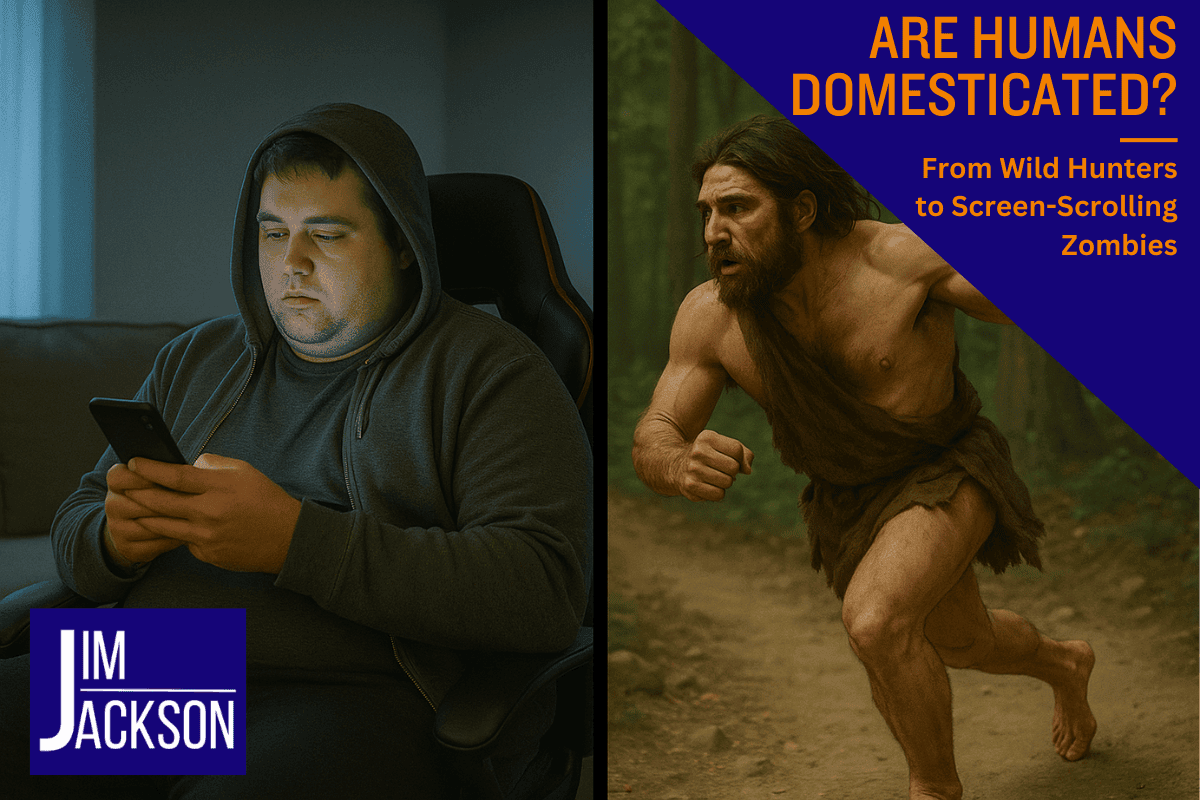
Are Humans Domesticated? From Wild Hunters to Screen-Scrolling Zombies

This question has been rattling around my head for a while now.
I like to go for a long hike on the weekends, and after about two hours in the wilderness, I start feeling like I belong there.
Like a rekindled connection, an innate bond with nature. It feels incredible and makes me want to come back for more – I’m always looking forward to my next adventure.
It makes sense; humans have lived in the wild for millennia until recent times. We’d have spent most of our time outside, being part of and living harmoniously with Mother Nature.
These days, we’re stuck indoors, eyes on a screen (like now), and the only connection with nature is a window – if you’re lucky.
We’re being sucked deeper and deeper into the digital world of the internet, gaming, social media, and AI, but we’re organic beings—not robots. We’re now so disconnected from nature and all its beauty and brutality.
We feel safe in our cozy homes and creature comforts… but how safe are we? And actually… could it be doing our physical and mental health harm?
In this post, we’ll explore the science and weird reality of human self-domestication, how it’s shaped our behavioral traits, messed with our stress response, and why we now cry in meetings instead of throwing spears.
From floppy ears to emotional control, we’ll ask the big question:
Are humans domesticated, and if so, can we regain some of our wildness?