Butter vs Olive Oil: Which Is Truly Healthier?

I think it’s safe to say that the majority would believe olive oil is far healthier than butter. Most, in fact, would consider this a no-brainer and would think anyone who believes differently is insane.
I know this because I’m in the butter camp. I love butter and eat it as a snack, and in doing so, I’ve had friends and family give me many a sideways look as I gorge on this dairy delight. Yes, I’m the crazy one in my gang.
Olive oil is branded as the healthy option in mainstream advice. At this point, before I delve into the facts, I actually have no major issues with olive oil, assuming it’s cold-pressed and not mixed with anything else, i.e., pure oil made from nothing but olives.
I reckon whether you eat olive oil or butter, you’ll be doing much better health-wise than anyone choosing vegetable or seed oils over these two options. Seed oils are, in my humble opinion, not food.
They are not supposed to be consumed by humans. I’d go as far as to say, they are poisoning us… very, very slowly. So slow, we don’t know it’s even happening.
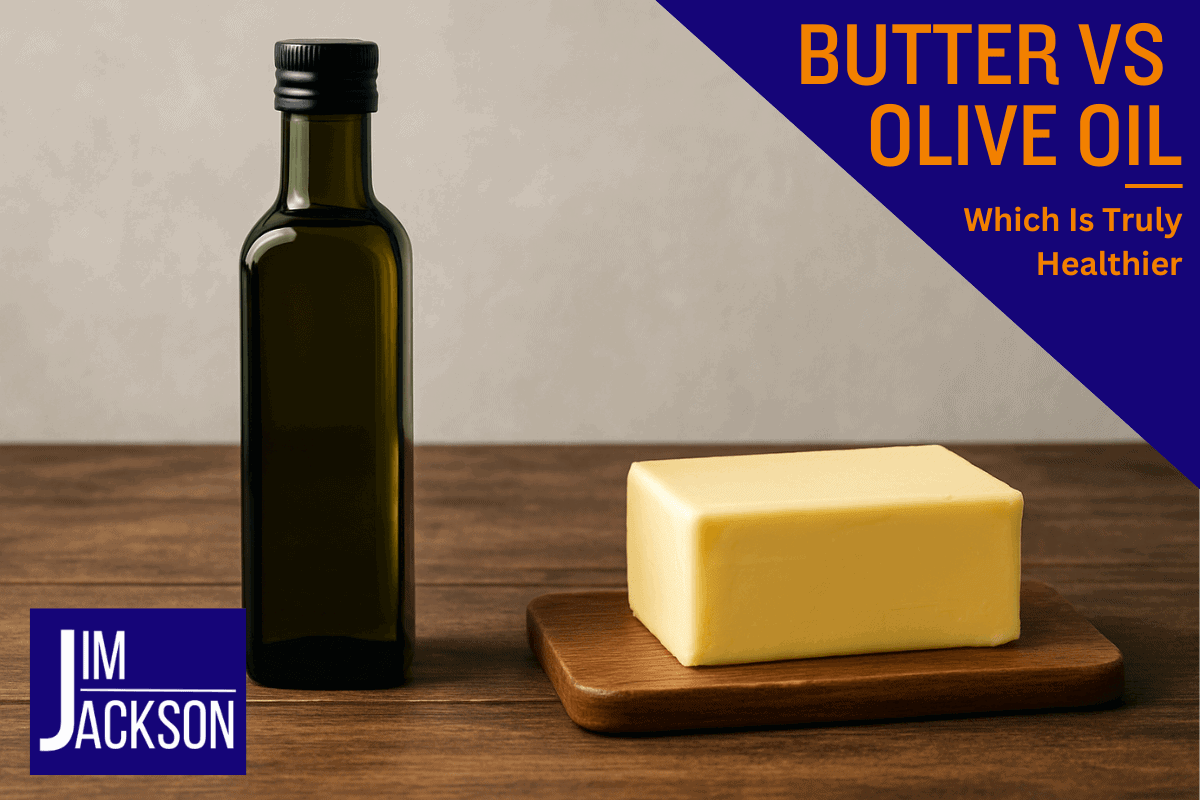
Anyway, I digress… back to the question: Butter vs Olive Oil: Which Is Truly Healthier?
One’s been painted as a villain for clogging arteries, while the other’s been crowned the “heart-healthy” hero. But is it really that simple?
For years, mainstream advice has urged us to consume plant oils instead of animal fats. Yet when you look at history—and even common sense—the story isn’t so clear. Butter has fueled humans for centuries, while olive oil arrived much later for most of the world.
So let’s cut through the myths and see what makes these two fats different.
TL;DR: Butter vs Olive Oil
- Butter offers more vitamins, steady energy, and is closer to what humans have always eaten.
- Olive oil can be healthy, but only high-quality extra-virgin oil is best used raw, not for cooking.
- Animal fats, such as butter, are more universal and reliable sources of fuel for the body than regional plant oils.
- The real problem isn’t butter—it’s processed seed oils and the mix of fat with sugar and refined carbs.
What Makes Butter and Olive Oil Different?
Butter comes from animal milk, while olive oil comes from pressed olives. That’s the key difference—animal fat versus plant oil.
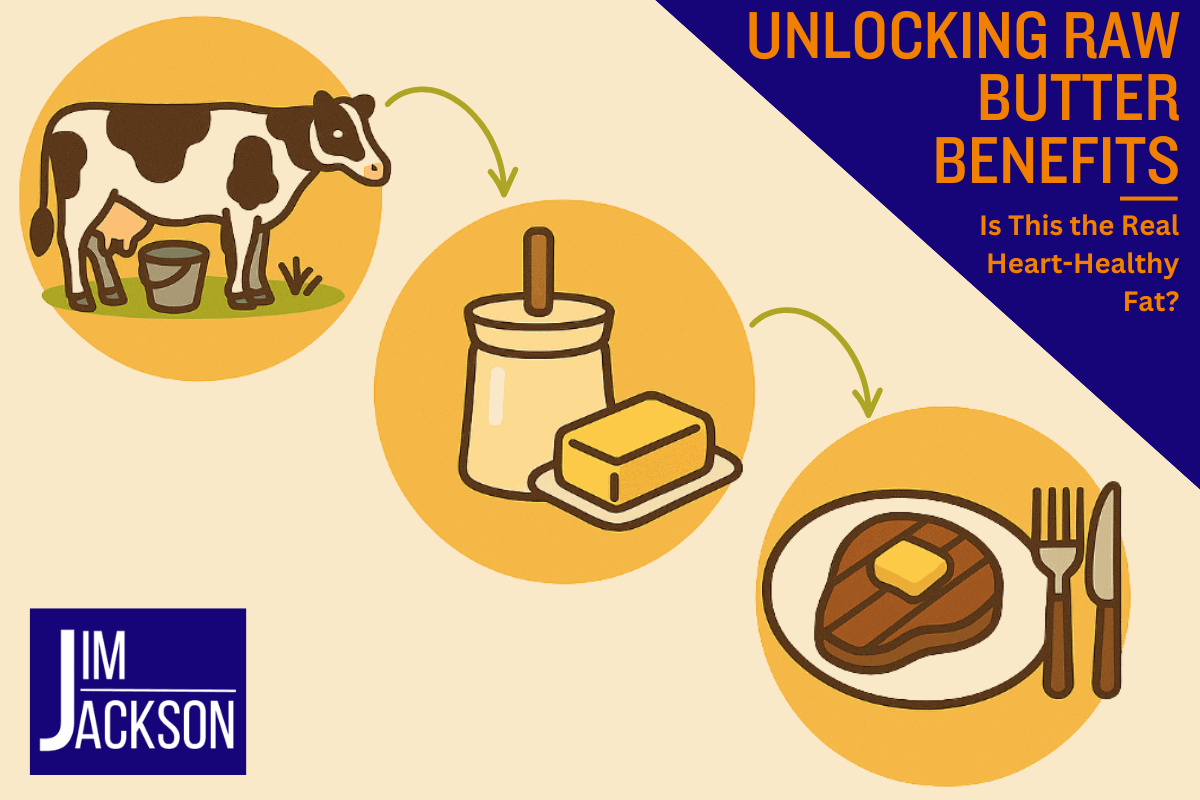
Butter is made by churning cream from cow’s milk until the fat separates. The result is a solid fat rich in saturated fatty acids, fat-soluble vitamins, and a flavor that has fueled cooking for centuries.
Olive oil is pressed from olives, usually in Mediterranean regions. It’s a liquid fat, mostly monounsaturated, with small amounts of polyphenols and vitamin E. Its reputation as “heart-healthy” comes from studies in populations where olive oil replaced refined seed oils, not traditional animal fats.
Common-Sense Check
If you lived thousands of years ago in northern Europe, which would you have found first—cow’s milk turned to butter, or Mediterranean olives pressed into oil? Butter is more universal. Olive oil required specific climates and advanced tools.
Is Butter Healthy?
Yes—especially when it comes from grass-fed cows. Butter provides energy, fat-soluble vitamins, and a steady source of fuel.
Butter isn’t just empty calories. It contains vitamins A, D, E, and vitamin K2, which are crucial for hormone health, immunity, and bone strength. Grass-fed butter has more omega-3s and CLA (conjugated linoleic acid), both linked to anti-inflammatory effects.
Mainstream advice often blames butter for increasing cholesterol levels. But cholesterol isn’t the villain it’s made out to be. Your body needs it to make hormones, vitamin D, and repair cells.
Eating butter as part of a low-carb or ancestral diet doesn’t carry the same risks as mixing butter with sugar and bread. That’s when problems start.
In my own diet, butter is a daily staple. I use it to snack on, fry eggs (or anything, TBH), melt it over steak, and add it to vegetables when I eat them. It’s reliable, tasty, and helps maintain steady energy levels.
FAQs About Butter
Does butter cause heart disease?
Not on its own. A systematic review reveals the risks associated with consuming refined carbs combined with butter. Butter consumption alone showed only small or neutral associations with heart disease.
Is grass-fed butter healthier than regular butter?
Yes. It contains more omega-3s, vitamin K2, and CLA compared to grain-fed butter.
Can butter be part of a weight-loss diet?
Absolutely. When paired with a low-carb diet, butter can help fuel fat burning and provide steady energy.
What’s better: butter or margarine?
Butter wins every time. Margarine is a man-made fat loaded with industrial seed oils.
Common-Sense Check
If butter was so dangerous, how did humans survive the last thousand years in dairy-heavy cultures like Switzerland or Scandinavia? The real decline in health only started with industrial oils and processed foods.
Is Olive Oil Healthy?
Yes, but context matters. Olive oil can be beneficial, yet it’s not the universal “heart savior” many claim it to be.
Olive oil is mostly monounsaturated fat, with some vitamin E and antioxidants called polyphenols. Large human data show extra-virgin olive oil intake can lower cardiovascular risk, although the context matters – it replaced margarine, seed oils, and refined junk, not butter or beef fat. That’s an important distinction.
Not all olive oils are equal, either. Extra-virgin olive oil is less processed and retains more beneficial compounds. Standard “olive oil” is often refined, stripped of nutrients, and sometimes blended with cheaper seed oils. Quality makes a huge difference.
In my own diet, I use olive oil sparingly. It’s fine as a drizzle over cooked meat or a cold dressing, but I don’t cook with it. Heat can damage its delicate compounds, while butter or beef fat handles the pan far better.
FAQs About Olive Oil
Is extra virgin olive oil healthier than regular olive oil?
Yes. EVOO is less processed and keeps more antioxidants and natural compounds than refined olive oil.
Can you fry with olive oil?
Not ideal. Heat can damage its structure, reducing benefits and creating harmful compounds.
Is olive oil better than seed oils?
Yes. Even average olive oil is a safer choice than industrial seed oils, such as soybean or canola.
Does olive oil help with weight loss?
It can, but only if used in place of processed oils or carbs—not alongside them.
Common-Sense Check
Mediterranean people historically ate olive oil because olives grew there. But if you lived in Northern Europe, you wouldn’t see an olive tree for thousands of miles. Your natural fat source would be animal-based, not imported plant oils.
Which Fat Is More Ancestral?
Butter is more ancestral for most humans. Olive oil was regional, but butter and animal fats were widespread wherever herds existed.
Did our ancestors eat butter?
Yes, in many regions. Once humans domesticated animals, butter became a natural source of fat. Cultures in Europe, the Middle East, and Asia relied on butter and ghee for centuries. In colder climates, animal fats like butter, tallow, and lard were essential for survival.
Did our ancestors eat olive oil?
Only in olive-growing areas. The ancient Greeks, Romans, and people of the Mediterranean used olive oil, but most of the world had no access to it. For northern tribes, butter, lard, or marrow fat were the fats that kept them alive.
In my own diet, butter feels like the more “universal” fat. Olive oil is fine in moderation, but butter has always been the steady, reliable fuel across cultures.
Common-Sense Check
Imagine you’re a hunter-gatherer in northern Europe. You’ve got cows, goats, or sheep. Would you really import olives across mountains—or just churn butter from your own herd?
What Happens When You Cook with Butter vs Olive Oil?
Butter is better for most cooking, while olive oil is best left for drizzling or cold use.
Does heat damage olive oil?
Yes. Olive oil, especially extra-virgin, breaks down at high temperatures. This can destroy its antioxidants and create off-flavors or harmful byproducts. That’s why it’s usually used raw in Mediterranean diets.
Is butter safer for high-heat cooking?
Yes. Butter handles heat better, especially clarified butter (ghee), which has the milk solids removed. It provides a stable cooking fat with reduced risk of oxidation. I use butter for frying because it stays steady under high heat.
Which fat gives better flavor?
That depends. Olive oil adds a light, fruity taste, but butter gives richness, depth, and satisfaction. For me, eggs in butter beat eggs in olive oil every time. Steak cooked in butter gets that perfect golden crust—hard to beat.
Common-Sense Check
If you had to cook meat over an open fire, would you drizzle on cold olive oil or baste it with melted butter or animal fat? One makes sense. The other feels forced.
How Do Butter and Olive Oil Affect Weight and Energy?
Both can fuel the body, but butter provides a steadier, more ancestral energy source—especially without carbs.
Do fats make you fat?
Not directly. Fat doesn’t spike insulin the way carbs do. The real issue is when fat is combined with sugar and starch, which encourages fat storage. Simply put, when carbs are around, the body will process these to maintain blood sugar levels while storing fat for a rainy day.
What happens if you eat fat without carbs?
Your body shifts into burning fat for fuel, known as ketosis. Butter, tallow, and other animal fats are perfect for this. Olive oil can work too, but butter delivers fat-soluble vitamins your body actually craves.
In my own diet, I’ve found butter keeps me full and focused. A couple of boiled eggs with butter or steak fried in it provides far more lasting energy than any carb-heavy snack.
Olive oil feels lighter, but it doesn’t hit the same way when you need stamina.
Common-Sense Check
Which makes more sense for survival—carbs that burn fast and leave you hungry again, or fat that keeps you going for hours? Our ancestors didn’t carry snack bars. They carried fat.
Are Saturated Fats Worse than Unsaturated Fats?
Mainstream nutrition suggests that saturated fat (such as butter) is harmful, while unsaturated fat (like olive oil) is protective. The truth is more complex.
What does mainstream science say?
Health authorities still warn against saturated fats because they can raise LDL cholesterol. They promote monounsaturated fats, like those in olive oil, as “heart-healthy.” Most of this advice comes from population studies that don’t separate natural fats from junk-food diets.
What does common sense say?
Humans ate saturated fats for thousands of years without modern heart disease. The rise in chronic illness started with seed oils, sugar, and processed food—not butter. If saturated fat were the actual problem, whole dairy cultures like the Swiss or Maasai would have collapsed centuries ago.
In my own experience, eating butter as part of an animal-based diet improved my energy and didn’t harm my blood markers. The danger arises when fats are combined with refined carbohydrates, not when they’re consumed as nature intended.
Common-Sense Check
If animal fat truly caused disease, how did people survive on it for millennia? The modern shift to processed oils tells a clearer story than demonizing butter.
Should You Replace Butter with Olive Oil?
No, you don’t need to replace butter with olive oil. Both have their place, but butter is the more universal fuel.
What happens if you switch completely?
If you ditch butter for olive oil, you lose out on fat-soluble vitamins A, D, E, and K2. These nutrients are difficult to obtain elsewhere in significant amounts. Olive oil may offer some antioxidants, but it won’t provide the same benefits as butter.
What about using both?
That’s reasonable—if you enjoy the taste. A drizzle of extra-virgin olive oil on a salad or cooked meat can add variety. But for cooking, frying, and fueling long-lasting energy, butter or ghee is far more reliable.
In my own kitchen, butter does 90% of the work. Olive oil is an occasional extra, not the foundation. That feels closer to how our ancestors would have eaten.
Common-Sense Check
Would you really swap a natural fat humans thrived on for thousands of years for a plant oil limited to one region of the world? Doesn’t make much sense.
What Do I Personally Use in My Diet?
For me, butter wins almost every time. It’s my go-to cooking fat, whether I’m frying eggs, finishing a steak, or just adding richness to a meal. It keeps me fueled and satisfied in a way olive oil never has.
That said, I’m not anti-olive oil. I’ll occasionally use it in a salad, but only alongside plenty of salt. When I do, I stick to high-quality, single-source extra virgin olive oil. Cheap supermarket bottles are often blended with seed oils—something I avoid completely.
This balance works for me: butter as my daily driver, olive oil as a rare extra. It feels closer to an ancestral approach—animal fats as the mainstay, olive oil used sparingly.
Common-Sense Check: What Would Humans Have Eaten First?
Let’s strip away the science, labels, and food politics. If you lived 10,000 years ago, what would you actually find to eat?
Butter—or at least animal fats like ghee, tallow, or marrow—were available wherever humans kept herds or hunted. Once milk was discovered, churning butter was simple and universal. It became a staple fuel across cold climates where survival depended on dense, reliable energy.
Olive oil, on the other hand, needed the right climate, the right trees, and special tools for pressing. Only people in the Mediterranean had access to it. For most of human history, it wasn’t even an option.
So which fat is truly more “human”? The one nearly everyone could make and thrive on, or the one tied to a specific region and technology? Common sense suggests that butter and animal fats were the ancestral choice.
Conclusion: Butter, Olive Oil, and the Common-Sense Choice
So, which is better for health—butter or olive oil? The answer depends on the context, but when we examine history and common sense, butter and other animal fats emerge as the top choices.
They’re more universal, nutrient-dense, and closer to what humans relied on for survival. Olive oil can be a fine addition, but only if it’s high-quality and not your main source of fat.
In my own diet, butter is the everyday fuel. Olive oil makes an odd appearance in a salad, but never as a cooking base. That’s because I trust animal fats to provide steady energy, fat-soluble vitamins, and the kind of nourishment that aligns with an ancestral way of eating.
If you want to dive deeper, check out:
- Is Beef Fat Good for You? — Why animal fats shouldn’t be feared.
- Seed Oils Destroy Lives — the real villains in modern diets.
- The Ultimate Human Diet — how to eat like your ancestors for better energy and health.
Choose wisely, cook with confidence, and fuel your body the way humans always have. Oh, and if you opt for butter, why not take it to the next level and choose raw butter for the added health benefits?
And that’s it… Have a nutritious day!
FAQs
Is butter healthier than olive oil?
Butter provides more vitamins and a steadier energy source. Olive oil is fine in moderation, but butter is the more ancestral choice.
Which is better for heart health, butter or olive oil?
Olive oil is promoted as heart-healthy, but evidence mostly compares it against seed oils—not natural fats like butter. Context matters.
Can you use butter and olive oil together?
Yes. Some people cook with butter for stability and add a drizzle of olive oil after for flavor.
Is extra virgin olive oil really different?
Yes. EVOO is less processed, keeps more antioxidants, and avoids the blends and fillers often found in cheaper olive oils.
Is butter good for a low-carb or keto diet?
Absolutely. Butter fuels fat burning, supports ketosis, and keeps you full without spiking blood sugar.