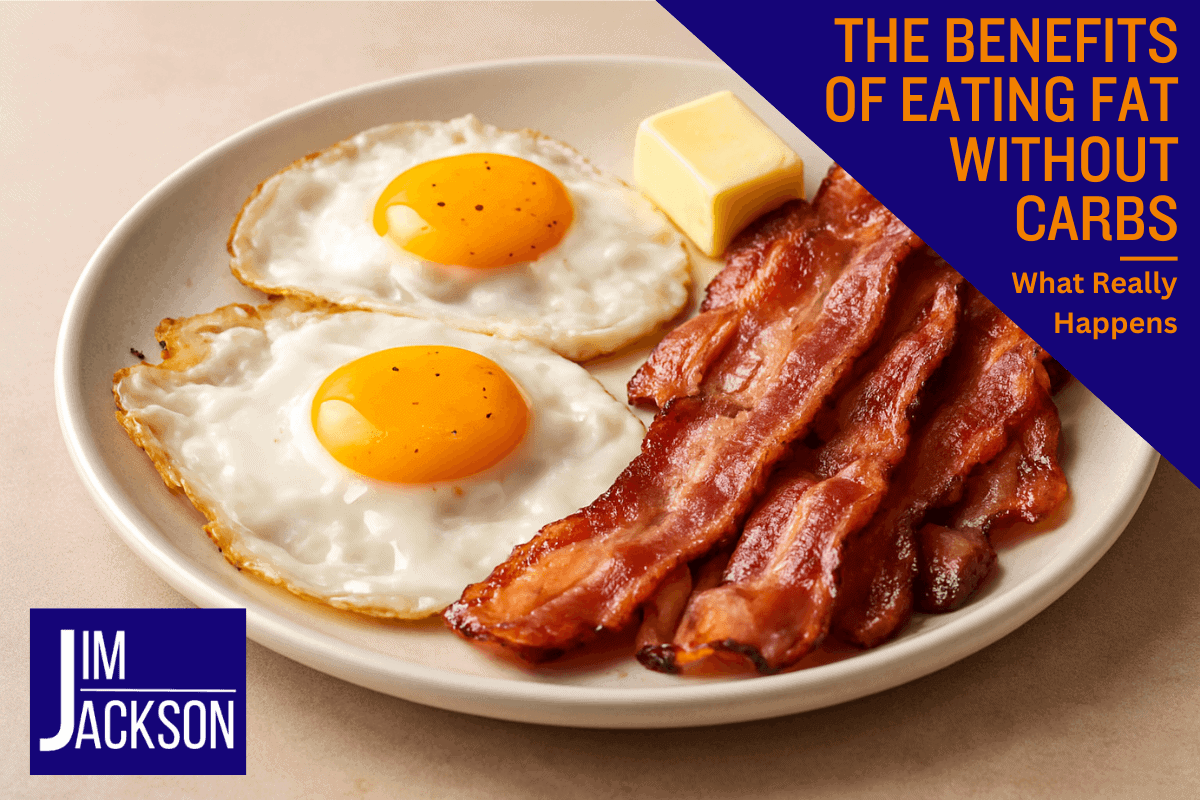
a plate of eggs and bacon depicting The-Benefits-of-Eating-Fat-Without-Carbs

The Benefits of Eating Fat Without Carbs: What Really Happens

If you ate a piece of bread without butter, no one would care. But, if you ate some butter without the bread… well, now you’re crazy. Most would think you’ve got a one-way ticket to a cardiac arrest.

Have you ever wondered, though, why humans have an exquisite fat storage system? If fat were that bad and carbs that good, why didn’t we develop a carb-storage system? So, is fat really that bad?

Perhaps the real trouble started when we began pairing fat with sugar, grains, and the endless carb-heavy foods that didn’t even exist for most of human history.

Today, we’re advised by the USDA, PHE, and WHO that it’s essential to have a balanced diet and, if anything, reduce our fat intake.

Yet countless people, myself included, find the opposite to be true. More stable energy. Fewer cravings. A clearer head. A metabolism that finally works with you, not against you.

If you’ve ever wondered what your body could feel like when it runs on the fuel it was designed for, you’re in the right place.

Let’s break it down with the basics: what are the benefits of eating fat without carbs?

Table of Contents

TL;DR

  • Eating fat without carbs gives you steady energy, clearer thinking, and fewer cravings.
  • Lowering carbs lowers insulin levels, unlocking fat burning and helping your body lose weight naturally.
  • Natural fats and meat digest cleanly, calm your gut, and support strong hormone health.
  • This way of eating works because it matches how humans fuelled themselves long before modern carbs existed.

What Does It Actually Mean to Eat Fat Without Carbs?

Eating fat without carbs means your body burns fat for fuel instead of relying on glucose. It’s a simple shift that changes how you produce energy.

Most people mix fat and carbs at every meal. Think butter on toast, cheese on pasta, or meat with a pile of potatoes. This combo pushes your body to use glucose first and store the fat. When you remove the carbs, that storage switch turns off. Your body starts using fat directly for energy.

In my own diet, this shift felt like someone finally flicked my “energy back on” switch. No sugar dips. No mid-afternoon slump. Just steady output.

You don’t need to cut every gram of carbs, either. The real goal is to drop them low enough for your body to stop chasing glucose. That gives fat the space to do its job.

What Counts as “Fat Without Carbs”?

Think simple, whole foods:

  • Ribeye cooked in butter
  • Eggs (nature’s perfect fat–protein combo)
  • Beef tallow, suet, ghee, or marrow
  • Cheese in moderation
  • Fatty cuts of meat like lamb, pork belly, or short ribs
  • Fish cooked in butter

These foods deliver energy without pulling your metabolism back into glucose-burning mode.

Does This Mean Zero Carbs?

Not always. Most people see benefits around 20g or less per day. Some stay a bit higher. I personally keep carbs low and get most of them from honey or seasonal fruit when needed.

The takeaway: the lower the carbs, the easier the fat-burning state becomes.

Common-Sense Check

Our ancestors didn’t eat buttered toast. They didn’t have crisps fried in seed oils. They didn’t chase every meal with a sugary snack…

They ate what they could hunt… And that meant fat and protein — alone, together, and without a bakery in sight.

Why Does Your Body Work Differently When You Remove Carbs?

Your body works differently without carbs because it stops relying on glucose and starts burning fat for fuel. This switch creates steadier energy and fewer cravings.

Most people run on glucose by default. Every carb you eat turns into sugar, which pushes your body to burn that sugar first. Once it’s gone, your energy crashes, and you crave more carbs. It’s a loop that never ends.

When you lower carbs, your body switches gears. It starts breaking down stored fat and dietary fat into ketones. These ketones power your brain and muscles without the rollercoaster.

In my own diet, this shift felt like stepping out of fog. My energy stopped dipping. My appetite settled. I could train, work, and think without feeling pulled toward food every few hours.

It literally cured me of my chronic fatigue syndrome.

What Happens to Your Metabolism When Carbs Drop?

Your metabolism becomes calmer and more efficient. Insulin drops, which help with fat burning. Blood sugar stabilises, removing the highs and lows that drain your energy.

This lower-insulin state is the reason eating fat alone doesn’t make you store fat. Your body uses it instead of packing it away.

How Does Your Body Switch From Glucose to Fat?

The switch is simple.
Drop carbs → insulin falls → fat burning rises → ketones appear.

Many people reach this state within 24–72 hours, depending on their diet and activity level. Once ketones rise, your brain gets a stable, clean-burning fuel source. This is why many people report better focus and fewer mood swings.

Quick Summary Box

EffectWhat Actually Happens
Lower carbsInsulin drops and fat burning increases
More dietary fatUsed as fuel, not stored
Ketones riseBrain and muscles get a steady energy source
Stable blood sugarNo more energy crashes

Common-Sense Check

Carbs were seasonal. Fruit came and went. Roots weren’t available year-round.
But animals? Always around if you could hunt them.

Your ancestors didn’t snack every few hours. They lived on fat when food was scarce and thrived on it. Your metabolism still prefers that system.

What Are the Main Health Benefits of Eating Fat Without Carbs?

Eating fat without carbs gives you steadier energy, fewer cravings, clearer thinking, and better metabolic control. It helps your body burn fat instead of storing it.

Most people don’t realise how much carbs dominate their day. They eat, spike blood sugar, crash, and repeat. When you remove the carbs and fuel with fat, that cycle stops. Your body stops chasing snacks and starts working the way it was designed.

In my own diet, this change was immediate. My mood lifted. My hunger dropped. I felt “switched on” again, even during long workdays or hard training sessions.

Let’s break down the main benefits.

Does Eating Fat Without Carbs Boost Energy?

Yes. Fat gives you stable, long-lasting energy without crashes.

Carbs hit fast but fade quickly. Fat burns slow and steady.
This is why you feel sharp after eggs and sluggish after cereal.

Many people notice they can work for hours without thinking about food. Hunger becomes quieter and more predictable.

Can Eating Fat Without Carbs Help with Fat Loss?

Yes. Lower carbs reduce insulin levels, which unlock fat burning.

Insulin is the “storage” hormone. When it’s high, fat-burning stops. When you drop carbs, insulin falls and your body taps into its fat stores.

This is why someone can lose fat even while eating more calories from ribeye or tallow. It’s the hormonal response that matters, not just the numbers.

I leaned out faster eating beef and butter than I ever did eating salads and grains. My clients say the same.

Does It Reduce Cravings and Hunger Swings?

Yes. Lower insulin means fewer cravings and better appetite control.

When your blood sugar stabilises, snacks lose their grip.
You feel satisfied after real meals and stop hunting for quick sugar fixes.

Many men tell me it’s the first time in years they weren’t thinking about food all day.

Can It Improve Focus and Mental Clarity?

Yes. Ketones give your brain a cleaner fuel source.

When you run on fat, your brain gets a steady stream of ketones.
No sugar dips. No fog. No, “I need a coffee to feel alive.”

When I switched, my concentration improved so much that I cut my caffeine intake in half.

Does It Support More Stable Blood Sugar?

Absolutely. Removing carbs takes the spikes and crashes out of your day.

Stable blood sugar supports calmer moods, better decision-making, and fewer emotional eating impulses.

This one change alone can transform how you feel every day.

Quick Summary Box

BenefitWhy It Happens
Steady energyFat burns slowly and evenly
Fat lossLower insulin improves fat burning
Fewer cravingsBlood sugar stays stable
Better focusKetones fuel the brain cleanly
Calmer appetiteHormones stabilise

Common-Sense Check

Picture a fry-up with toast… or chips cooked in seed oils… or a burger with a bun.
Fat + carbs = store the fat, burn the carbs… It’s the perfect recipe for weight gain.

But fat on its own — like eggs, steak, or marrow — fuels you without triggering storage mode.
Your ancestors didn’t mix fat with flour and sugar. They ate what nature provided, not what factories invented.

Why Does Eating Fat Without Carbs Often Lead to Faster Weight Loss?

Eating fat without carbs leads to faster weight loss because it lowers insulin and increases fat burning. Your body finally taps into stored fat instead of storing more.

When carbs drop, insulin falls. This unlocks access to fat stores and keeps fat from being pushed into storage. It’s the hormonal shift that makes the real difference, not endless calorie counting.

Most people experience natural appetite control, making eating less effortless.

In my own life, I lost more fat eating ribeye and eggs than I ever did eating chicken salads and brown rice. Once carbs went down, my body stopped fighting me.

Does Ketosis Make Fat Burning Easier?

Yes. Ketosis turns fat into a clean fuel called ketones, which your body burns efficiently.

Ketosis doesn’t mean extreme dieting. It simply means your body uses fat as its main energy source. This state is normal for humans. Our ancestors moved in and out of ketosis whenever food was scarce or carbs were low.

Ketones keep your energy stable while your body burns both dietary fat and stored fat.

How Does Removing Carbs Affect Insulin?

Lower carbs mean lower insulin, and lower insulin unlocks fat loss.

Insulin controls whether you store fat or burn it. High insulin blocks fat burning, even if you’re eating “healthy” foods. When you drop carbs, insulin falls, and your fat-burning switch turns on.

This is why someone can struggle to lose fat while eating whole grains… but lose fat quickly on steak and eggs.

Does Fat Storage Change When Carbs Are Low?

Yes. Without carbs, your body has no reason to store fat. It uses it instead.

When carbs are around, your body burns those first. Fat becomes the “backup fuel,” so it gets stored. When carbs disappear, fat becomes the primary fuel, and your metabolism gets the message.

Your body becomes a fat-burning machine instead of a fat-storing machine.

Quick Summary Box

Why Fat Without Carbs Speeds Weight LossWhat It Does
Lowers insulinAllows fat burning to switch on
Increases ketonesProvides stable energy while burning fat
Reduces hungerHelps you eat less naturally
Stops fat storageRemoves the hormonal trigger for storing fat
Improves metabolismMakes energy use more efficient

Common-Sense Check

Imagine a hunter-gatherer winter. No fruit. No grains. No bread.
Just meat, fat, and whatever you could find.

Your body is built to burn fat for long periods. Carbs were rare.
Modern life flipped that pattern completely.

When you return to a low-carb, fat-fuelled state, your body simply goes back to the system it was designed to use.

Is Fat Without Carbs Better for Your Heart?

Yes. Eating fat without carbs can support heart health by lowering inflammation, improving triglycerides, and raising protective HDL. The research is far more supportive than most people realise.

Fat gets blamed for heart issues, but the real problem usually comes from mixing fats with carbs and sugar. That combo raises triglycerides, fuels inflammation, and overloads your metabolism. When you remove the carbs, the entire picture changes.

In my own diet, my triglycerides dropped, my HDL increased, and my energy felt smoother. Many men report the same when they shift to meat, eggs, and natural fats.

Do Saturated Fats Harm or Help?

Saturated fats on their own don’t harm your heart. They become a problem only when mixed with high-carb diets.

Large reviews show that saturated fat alone isn’t linked to heart attacks. What is linked? Refined carbs, seed oils, and inflammatory foods.

When saturated fat comes from real foods like beef, butter, eggs, and cheese — and isn’t paired with sugar or grains — your body uses it cleanly for fuel.

What Does the Latest Research Actually Say?

Studies show low-carb, high-fat diets often improve heart markers rather than worsen them.

Reliable findings include:

  • Lower triglycerides
  • Higher HDL (“good” cholesterol)
  • Better blood sugar control
  • Reduced inflammation markers

A well-known clinical trial found that low-carb diets improved triglycerides more than low-fat diets (Foster et al., NEJM, 2003).
Another meta-analysis found no link between saturated fat intake and heart disease risk (Siri-Tarino et al., AJCN, 2010).

These aren’t fringe studies. They’re mainstream research.

How Does Inflammation Change on a Low-Carb, High-Fat Diet?

Inflammation often drops because you remove the foods that irritate your system.

Carbs — especially grains, seed oils, and processed foods — can spike inflammation. When you cut them out, your body finally gets a break.

Most people feel this in their joints, digestion, and energy levels.

Quick Summary Box

Heart MarkerWhat Fat Without Carbs Does
TriglyceridesDrops them significantly
HDL cholesterolRaises it
LDL patternsOften shift to safer, larger particles
Blood sugarBecomes more stable
InflammationReduces across the board

Common-Sense Check

If butter, beef fat, and eggs were dangerous, we would not be here.
Our ancestors lived on these foods for millennia.

What is new..? Seed oils. Ultra-processed carbs. Deep-fried everything.
Your heart struggles with modern food, not with the fats found in nature.

Can Eating Fat Without Carbs Support Hormone Health?

Yes. Eating fat without carbs supports hormone health because cholesterol is the raw material for many hormones. Lower carbs also stabilise insulin levels, which helps your entire hormonal system function properly.

Your hormones run the show: energy, mood, strength, libido, sleep — all of it. When you remove carbs and fuel with fat, you take pressure off your metabolism and give your body the building blocks it needs.

In my own diet, this shift boosted my energy and drive. I slept better and felt more stable day to day.

Does Cholesterol Actually Help Make Hormones?

Yes. Cholesterol is essential. Your body uses it to make testosterone, cortisol, estrogen, and vitamin D.

This often shocks people because cholesterol has been framed as a villain for decades. But without it, your hormones can’t function.

When you eat fatty foods like eggs, beef, butter, and cheese, you give your body the fuel it needs to naturally produce and regulate hormones.

Low-fat diets do the opposite. They starve your body of the material required for hormone production.

Why Do Men Often Feel Stronger and More Driven on a Low-Carb, High-Fat Diet?

Because stable blood sugar and adequate dietary fat support testosterone production and reduce stress hormone levels.

When insulin stays low, you stop the constant energy swings. This helps your body maintain a healthier testosterone-to-cortisol ratio.

Many men report:

  • Stronger morning energy
  • Better performance in the gym
  • Increased libido
  • Sharper focus
  • More stable emotions

There’s even research showing that low-fat diets can lower testosterone levels. Fat is essential for male strength and resilience.

What About Thyroid Health?

Fat without carbs supports a calmer metabolic environment, which helps thyroid hormones work more efficiently.

Your thyroid doesn’t need a high-carb diet. It requires enough nutrients, stable energy, and reduced inflammation — all of which improve when carbs drop and fat rises.

People often report warmer hands, better mood, and improved energy after switching.

Quick Summary Box

Hormone AreaHow Fat Without Carbs Helps
TestosteroneSupports production and improves balance
ThyroidReduces metabolic stress and inflammation
CortisolStabilises through steady blood sugar
Vitamin DBoosted via dietary fats and cholesterol

Common-Sense Check

Think about it, our ancestors didn’t trim the fat off a deer or bison. They prized the fat. It was energy, nourishment, and vital fuel.

If humans were meant to fear dietary fat, evolution did a terrible job. Your hormones thrive on real fats — not on processed carbs and seed oils.

Does Eating Fat Without Carbs Improve Digestion?

Yes. Many people notice less bloating, smoother digestion, and fewer gut issues when they remove carbs and rely on fat and protein.

Carbs — especially grains, sugar, and fiber-heavy foods — often irritate the gut. Fat and protein digest cleanly and don’t ferment in the same way, so your stomach feels calmer and more predictable.

In my own diet, the change was dramatic. My digestion felt quieter and more stable—no more random bloating or discomfort after meals.

Is Fiber Essential for Digestion?

No. Fiber isn’t essential for healthy digestion. Many people actually feel better with less of it.

This is hard to accept because we’ve been told fiber fixes everything. But several clinical studies show that removing fiber can improve constipation in some instances. One study found patients had better outcomes when fiber was reduced or removed (Ho et al., World Journal of Gastroenterology, 2012).

When you eat low-carb and higher fat, digestion slows naturally, which is good. Slower digestion means more complete absorption and less irritation.

Why Do Many People Get Less Bloating and Discomfort?

Because most bloating comes from fermentation, and carbs ferment — fat doesn’t.

Carb-heavy foods feed gut bacteria quickly. This creates gas, pressure, and inflammation for many people. When you lower carbs, you reduce that fermentation, and the gut becomes calmer.

People often report:

  • Less bloating
  • Less wind
  • A flatter stomach
  • Better bathroom habits
  • No sudden urgency after meals

It’s a simple cause-and-effect.

Can Animal Fats Help the Gut?

Yes. Animal fats provide steady fuel without irritating the gut lining.

Tallow, butter, ghee, suet, and fatty meat require minimal digestive effort. They also don’t feed problematic bacteria. This is why carnivore-style eating often helps people with IBS, reflux, and chronic bloating.

Quick Summary Box

Digestive IssueHow Fat Without Carbs Helps
BloatingLess fermentation from carbs
ConstipationSmoother digestion and calmer gut
GasReduced carb-driven fermentation
RefluxLower inflammation and fewer irritants
IBS symptomsSimpler foods and better gut stability

Common-Sense Check

Our ancestors didn’t graze on fiber-heavy snacks. They ate meat, fat, and occasional seasonal plants. They didn’t rely on fibre supplements or bran flakes to “stay regular.”

Their digestion worked because they ate foods humans evolved to digest well — not ultra-processed grains… Your gut often thrives on simplicity.

What Foods Fit This Way of Eating?

The best foods are simple animal-based options like meat, eggs, butter, and natural fats. These keep insulin low and give you steady, reliable energy.

This way of eating works best when you choose whole foods your body recognises. In my own diet, most of my calories come from fatty meat, eggs, and butter. It feels natural, satisfying, and easy to stick to because the meals actually keep you full.

Animal fats burn clean and digest smoothly. Things like tallow, butter, ghee, suet, and duck fat leave you feeling energised without the heaviness you get from carb-heavy meals. Fatty cuts of meat — ribeye, lamb shoulder, pork belly, short ribs — deliver the fuel and nutrients your body runs on best.

Eggs remain one of my daily go-tos. They’re portable, packed with complete nutrients, and keep cravings quiet. Organ meats can also make a difference. You don’t need a lot of them, but liver or heart provides nutrients you won’t find in plant foods.

Vegetables are optional. Some people enjoy them. Others feel better without them. Seasonal fruit works if you want a small boost of carbs without losing the benefits of fat-burning.

Which Fats Work Best?

Animal fats work best because they digest cleanly and don’t inflame your system.

Your top choices include tallow, butter, ghee, suet, duck fat, and marrow. These fats were part of the human diet long before seed oils existed.

Which Animal Foods Give the Biggest Benefits?

Fatty cuts of meat provide the ideal mix of fuel and nutrients.

Foods like ribeye, lamb, short ribs, pork belly, chicken thighs with skin, and eggs give you steady energy without triggering hunger swings.

Do You Need Vegetables at All?

No. Vegetables are optional, not essential.

You can include small amounts for taste, but your body can thrive without them.

Quick Summary Box

CategoryBest Options
Natural fatsTallow, butter, ghee, suet
MeatRibeye, lamb, pork belly, short ribs
EggsIdeal daily food
Organ meatsLiver, heart, kidney
Optional extrasSeasonal fruit or simple vegetables

Common-Sense Check

Our ancestors didn’t track fiber or chase macros. They ate meat, fat, and whatever seasonal plants they found.

This way of eating brings you back to the foods humans lived on for most of our history.

Is This Way of Eating Safe Long-Term?

Yes. Eating fat without carbs is safe in the long term for most people because it aligns with human biology and history.

When you fuel your body with natural fats and remove processed carbs, your metabolism becomes calmer. Digestion improves. Appetite settles. My own long-term experience reflects this — better energy, better blood markers, and a much clearer head.

Many of the fears around this way of eating come from outdated nutrition advice. Low-fat diets were built on theories that never matched human physiology. When carbs are low, fat becomes a clean, stable fuel source.

What Common Myths Should You Ignore?

Most myths come from research done on high-carb, low-fat diets — not on people eating high-fat and low-carb diets.

The idea that fat “clogs arteries” doesn’t hold up when carbs are low. The assumption that you “need carbs for energy” ignores how ketones fuel the body. And the belief that low-carb eating “slows your metabolism” has been debunked by multiple trials.

What Signs Show Your Body Is Thriving?

Your body will show clear signs when this way of eating suits you.

Steadier energy. Better sleep. Fewer cravings. A calmer gut. A more stable mood. Stronger workouts. You don’t need lab tests to notice these changes — you feel them every day.

When Should Someone Avoid Eating Very Low Carb?

A few groups need a slower or supervised transition.
If you’re on glucose-lowering medication, pregnant, or managing a diagnosed condition, you should make changes with support. Endurance athletes may also need an adaptation period.

For most people, though, lowering carbs is not only safe — it’s beneficial.

Quick Summary Box

QuestionSimple Answer
Safe long-term?Yes, for most people
Are myths valid?No — most are outdated
Signs it works?Stable energy, better mood, fewer cravings
Who should go slower?Anyone on medication or special care

Common-Sense Check

Humans have thrived on high-fat diets, mixed diets, and almost zero-carb diets. But no civilisation has thrived on low-fat, grain-heavy, processed food — because it didn’t exist.

When a diet fits human evolution, it usually fits human health.

What Results Can You Expect in the First Week?

Most people feel steadier energy, fewer cravings, and a calmer appetite within a week. Some notice clearer thinking and better digestion almost immediately.

Your body responds quickly once carbs drop and fat becomes your primary fuel. The first few days can feel different, but the benefits usually appear faster than people expect.

In my own experience, the first week felt like someone slowly turning the power back on. My hunger settled. My energy stopped spiking and crashing. I didn’t think about snacks, and my focus sharpened without trying.

Will You Get More Energy Quickly?

Yes, but the timing varies. Many people feel stable, grounded energy within 3–5 days.

The early change is due to stable blood sugar. Once you stop riding the carb roller coaster, your energy becomes steady and predictable. You feel more “steady” than “buzzing,” which is a good sign your metabolism is shifting.

What Changes Happen in the First 7 Days?

You’ll notice subtle but powerful shifts as your body adjusts.

Many people report:
⚡ Steadier energy
😌 A calmer mind
🥩 Reduced cravings
🔥 Warmer body temperature
💤 Better sleep
🧠 Improved focus
🍽️ Longer gaps between meals

Meals suddenly “stick” with you longer. Hunger becomes gentler and less urgent. Your brain feels clearer because ketones are a cleaner fuel than glucose swings.

Some people also lose water weight — especially if they were eating a lot of carbs before. This isn’t fat loss yet, but it shows insulin is dropping and inflammation is calming.

Is There Anything Uncomfortable in the First Few Days?

You might feel a brief dip as your body transitions, but it passes quickly.

This is the normal “fuel switch.” It isn’t a problem — it’s your metabolism learning to stop chasing carbs. Adding a bit of extra salt helps most people feel better instantly. I always increase my electrolytes during the first few days.

Quick Summary Box

First-Week ResultWhy It Happens
Steady energyBlood sugar stabilises
Fewer cravingsInsulin drops
Better focusBrain uses ketones
Calmer digestionLess carb fermentation
Reduced bloatingLess irritation

Common-Sense Check

If humans crashed every time carbs were low, we wouldn’t exist.

Our ancestors often went days or weeks on meat and fat alone, especially in winter.
Feeling better on fat isn’t surprising — it’s your body remembering an older, more efficient system.

Common Sense Check: What Would Your Ancestors Have Eaten?

Your ancestors relied on fat and protein far more than carbs. Carbs were seasonal, but fat was a dependable fuel year-round.

If you strip away supermarkets, delivery apps, bakeries, and processed foods, you’re left with the diet humans lived on for most of our existence — meat, fat, and whatever plants appeared in season.

When you look at it through that lens, eating fat without carbs isn’t extreme. Modern diets are.

Were Carbs Even Available Year-Round?

No. Carbs came and went with the seasons.

Fruit appeared in late summer. Honey was rare. Tubers were hard to dig up and not always available. Bread, pasta, cereal, and rice? They didn’t exist.

For most of the year, humans relied on animals, not fields of grain.

When people argue that you “need” carbs, they ignore the simple reality that our species survived long stretches without them. Fat and protein carried us through winters, droughts, and migrations.

Did They Rely on Fat for Survival?

Yes. Fat wasn’t just food — it was prized fuel.

Hunter-gatherer groups actively sought the fattest animals because fat delivered more energy with less effort. Lean animals were considered weak food. Some cultures even threw away lean meat because it didn’t sustain them.

This explains why many people feel better when they shift to fat-driven metabolism. You’re not doing anything new. You’re simply returning to a fuel source your body already understands.

Quick Summary Box

QuestionAncestral Reality
Were carbs consistent?No — they were seasonal and limited
Was fat easy to find?Yes — animals provided steady fuel
Did humans depend on fat?Absolutely, especially in winter
Is low-fat normal?No — it’s modern and unnatural

Common-Sense Check

If fat were dangerous, humans wouldn’t be here…

If carbs were essential, hunter-gatherers would have dropped like flies every winter…

And if seed oils were the “healthy choice,” it makes no sense that they appeared only in the last century.

Final Thoughts: Why Fat Without Carbs Helps You Refuel and Recharge

Eating fat without carbs works because it matches how your body was designed to function.

You give your metabolism a break from the blood sugar rollercoaster. You stabilise your energy. You burn fat instead of storing it. And you stop fighting your appetite all day.

In my own life, this way of eating brought my energy back, cleared my head, and helped me feel stronger in my thirties and forties than I ever did in my twenties.

It’s simple, it’s sustainable, and it aligns with human biology rather than modern food marketing.

When you cut out the noise and focus on real food — meat, eggs, natural fats — your body responds fast. You feel calmer, more capable, and more in control of your health.

It’s not a diet. It’s a return to a fuel source your ancestors trusted for thousands of years. It’s what I call the Ultimate Human Diet.

And that’s the real power here: you’re refuelling and recharging the way humans were meant to.

And that’s it… Have a nutritious day!

FAQs About Eating Fat Without Carbs

Can You Eat Too Much Fat?

It’s possible, but unlikely when carbs are low.
When insulin is low, your body burns fat efficiently. You feel full faster, making it harder to overeat. Most people naturally stop when they’re satisfied. In my own diet, I’ve never had the urge to overeat fatty foods — they’re filling, not triggering.

Do You Need Carbs for Workouts?

No. Your body can perform well using fat and ketones.
Strength training works brilliantly on a low-carb, high-fat approach. I train this way myself. Once adapted, your body taps into deep energy reserves instead of relying on quick sugars. Endurance athletes may need a more extended adaptation period, but once they’re fat-adapted, performance often improves.

What About Cholesterol Numbers?

Cholesterol often improves when carbs are low, and fats are natural.
Triglycerides usually fall. HDL often rises. LDL may shift toward larger, safer particles. These changes happen because fat-burning reduces inflammation and stabilises blood sugar. The numbers tend to reflect a healthier metabolic picture, not a worse one.

Is This the Same as Keto?

It’s similar, but not identical.
Keto focuses on hitting specific macros. Eating fat without carbs focuses on the foods themselves. It’s simpler, more intuitive, and closer to how humans naturally ate. You don’t need apps, graphs, or keto products — just real food.

Will I Lose Muscle Without Carbs?

No. You maintain muscle as long as you eat enough protein.
Some people even gain strength because fat provides steady fuel without the crashes carbs create. I’ve easily maintained muscle with eggs, meat, and steady training.

Similar Posts

Leave a Reply

Your email address will not be published. Required fields are marked *